Green Tea Aqueous Extract
Antioxidant Botanical Extract
Adds botanical and antioxidant value to the formula.
TECHNICAL DATA
INCI green tea (Camellia sinensis), propylene glycol, methylparaben, imidazolidinyl urea, water.
Appearance Transparent liquid
Color Reddish brown
Odor Characteristic
pH at 20 °C/68 °F 4.0-6.5
Density at 20 °C/68 °F 1.000-1.015 mg/ml
Refractive index 1.3340-1.3515
Solubility In water, alcohols and glycols.
Count Mesophilic count · 100 CFU/ml max.
Count Yeast and mold count · 100 CFU/ml max.
Total coliforms <10 UCF/ml
Aerobic mesophilic count. 100 CFU/ml max.
Yeast and mold count. 100 CFU/ml max.
APPLICATIONS
CreamsTonersGelsMasks
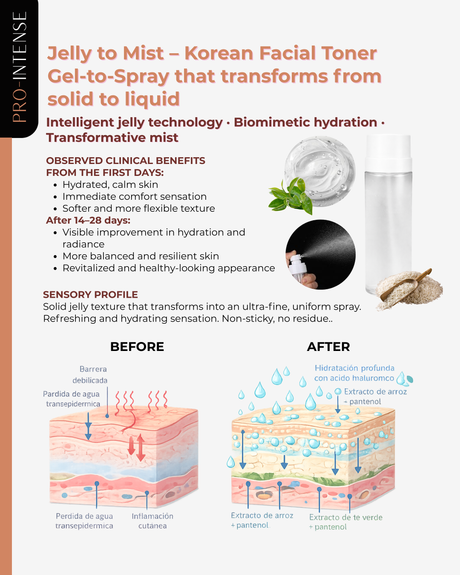
Green tea is traditionally valued as a toning, antioxidant and soothing botanical ingredient.
DESCRIPTION
GREEN TEA COSMETIC AQUEOUS EXTRACT
Aqueous extract of the plant known as green tea (Thea sinensis). Its main components are carbohydrates, proteins, lipids, minerals such as fluorine, magnesium and potassium, organic acids, phenolic acids, flavonoids, tannins, alkaloids and B-complex vitamins. Contains a blend of methylparaben, propylparaben and imidazolidinyl urea at 0.3 % as a preservative for easier handling and storage.
Practical formulation guide
Usage level: 1 to 5 % is recommended.
How to use and incorporate: Aqueous, glycolic or glycerin extracts: add to the water phase or during cool-down (below 40 °C/104 °F). Oil extracts: add to the oil phase or during cool-down. Powdered extracts: first dissolve or disperse in water or glycerin. Adjust the pH at the end.
Table 1::
- Extracts contribute color, odor and microbial load: use a broad-spectrum preservative system and run a microbial challenge test on the final formula.
- They may precipitate in the cold or over time; filter or shake before use and check that the color or clarity of the finished product does not change.
- Before scaling up, make a pilot batch and run a stability test (cycles at 4 / 25 / 45 °C/39 / 77 / 113 °F for 4 weeks, checking odor, color, pH, viscosity and separation) in the final packaging.
Compatibility: Aqueous and glycolic extracts are compatible with gels, toners, emulsions and surfactant bases; oil extracts with oils and emulsions. Some tannins and flavonoids darken in the presence of iron or at alkaline pH.
Storage: The optimal storage temperature for the extract is between 4 and 18 °C/39 and 64 °F, protected from light. If precipitates form during storage, shake until reconstituted before adding to your formulation.
Precautions: Handling: Add as the last ingredient of the preparation at temperatures below 50 °C/122 °F; dissolving it before use is recommended. Once the container is opened, handle the product with care to avoid secondary microbial contamination. None in particular for the user.
Technical information for formulators: This sheet describes industrial uses of the raw material in the development of cosmetic products. It is not an efficacy claim for any finished product. The person responsible for the formulation must validate the concentration, compatibility and claims of their product in accordance with applicable regulations.
✉️ sales@gardenianaturals.ca · COA and Safety Data Sheet available with purchase · 🚚 Ships across Canada and the USA